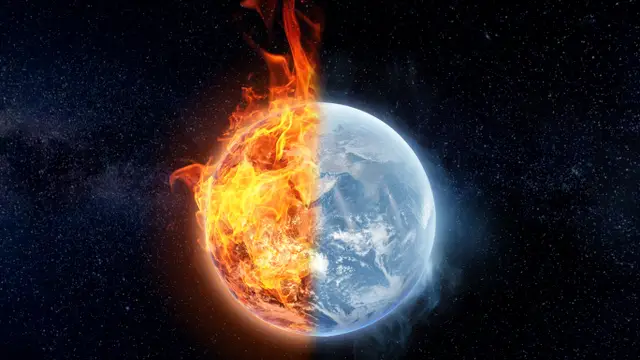
Climate scientists are closely monitoring the Pacific Ocean as growing evidence suggests that a rare and potentially powerful “Super El Niño” could develop later in 2026, raising concerns about extreme weather events across the globe.
According to recent forecasts and climate experts, ocean temperatures in the tropical Pacific are rising faster than expected, increasing the likelihood of a strong El Niño event. Some models suggest it could become one of the most intense El Niño patterns seen in decades, although scientists stress that it is still too early to confirm its exact strength.
El Niño is a natural climate phenomenon that occurs when surface waters in the central and eastern Pacific Ocean become unusually warm. The event can disrupt weather patterns worldwide, often leading to severe heatwaves, droughts, floods, stronger storms, and agricultural disruptions in different regions.
Experts say the biggest concern is that a strong El Niño could combine with ongoing climate change, pushing global temperatures to new record highs. The World Meteorological Organization recently warned that an expected El Niño later in 2026 could contribute to some of the hottest years ever recorded between 2026 and 2030.
While some headlines have referred to the developing system as a “Super El Niño,” meteorologists note that the term is not an official scientific classification. However, several climate agencies have acknowledged that current ocean conditions could support an exceptionally strong event if warming continues through the year.
If the phenomenon strengthens as predicted, regions around the world could face major impacts, including increased flooding in parts of the Americas, drought conditions in Australia and Southeast Asia, and heightened risks of extreme heat globally. Scientists say the strongest effects would likely be felt between late 2026 and early 2027.
For now, researchers continue to monitor Pacific Ocean temperatures and atmospheric conditions before making definitive predictions about whether the developing pattern will evolve into a full-scale Super El Niño.